
- What is the concept of komorebino wine list?
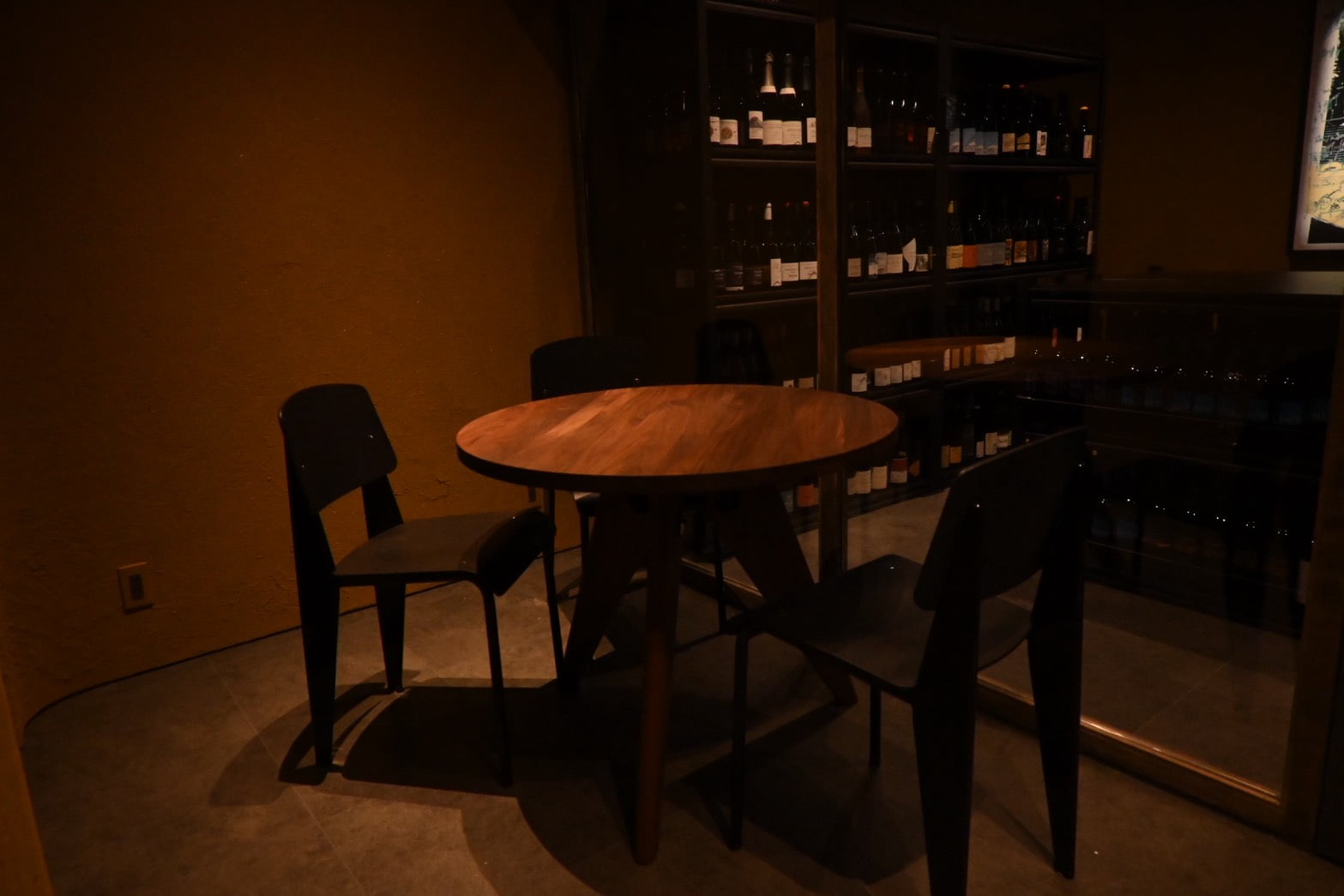
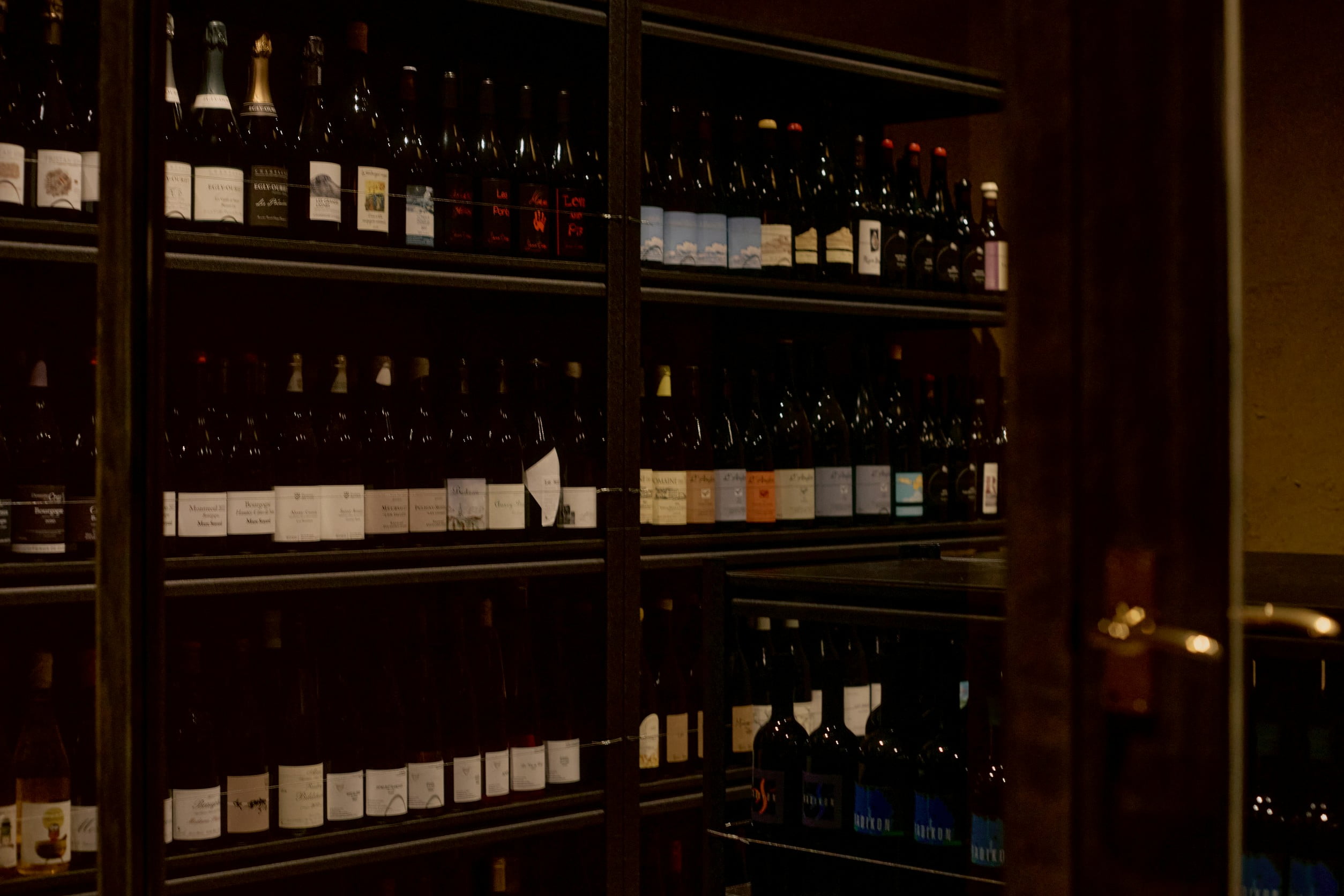
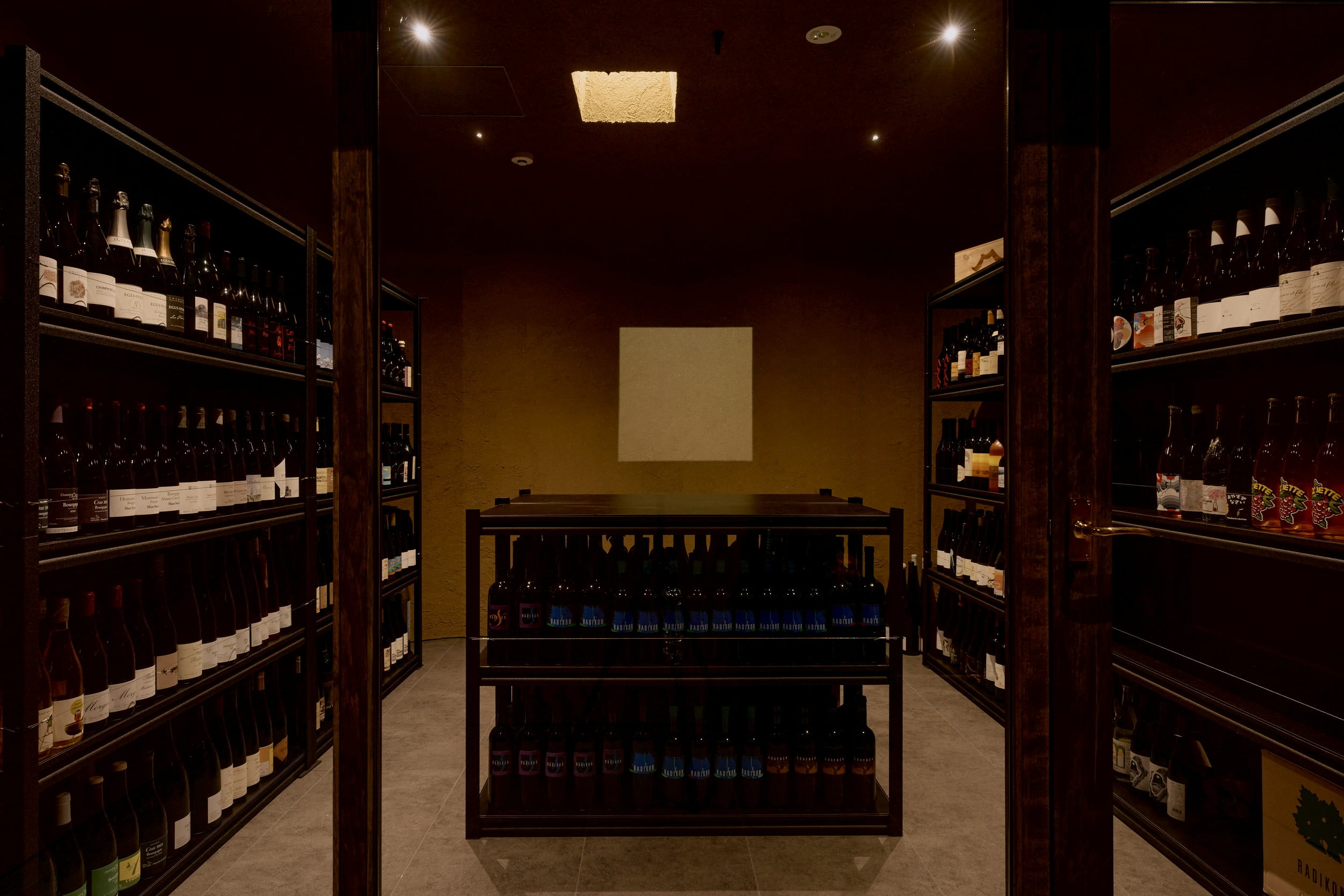
At komorebino, we exclusively serve a curated selection of natural wines from around the world. Our collection is composed of 43% French, 26% Italian, 17% Japanese, and 4% Austrian wines, with the remaining 10% sourced from other regions. Our natural wine cellar (KUROMURO) houses approximately 1,000 varieties, from which we have meticulously selected 599 for our wine list.
Specifically, we feature 101 varieties of Japanese wine. We chose this number because 101 symbolizes "beginnings" and "foundations." We have crafted this list as the "ultimate textbook" for enjoying Japanese wine—designed to be accessible for newcomers and a source of fresh discovery for connoisseurs. We also offer the "Japanese Wine Flight!!", a tasting menu featuring five selected Japanese wines by the glass.
In Japan, we have a traditional concept called Nijūshi-sekki which divides the year into 24 distinct solar terms. We believe that the changing of seasons isn’t limited to just Spring, Summer, Autumn, and Winter; it is a continuous, delicate transition.
Take Spring, for example. There is a profound difference between the time when snow melts and buds first peek through (Usui -雨水), and the peak of the spring equinox (Shunbun -春分). As the ingredients on our plates change, so too do the flavors our bodies crave.
Because natural wine is a "living" reflection of nature, we update our wine list 24 times a year to perfectly harmonize with these micro-seasons. Our mission is to offer you a glass that vividly captures "the season of this very moment."
- What is the "Japanese Wine Flight!!"?
Our "Japanese Wine Flight!!" is a curated journey designed to introduce you to the authentic essence of Japan’s terroir.
Think of it as Japanese Wine 101. Rather than focusing on international varieties, we hand-select wines crafted from indigenous Japanese grapes, offering a true taste of our land’s unique character.
From the crisp, mineral notes of mountainside vineyards to the delicate, umami-rich profiles that define Japanese winemaking, this flight showcases the regional diversity of Japan’s premier wine districts.
The Omakase Flight: 5 (+1) Selections
- A Curated Mix: 5 distinct wines plus 1 "bonus" pour.
- The Lineup: A rotating selection of Sparkling, White, Orange, Rosé, or Red—depending on the day’s best bottles.
- The Focus: Indigenous varieties (such as Koshu, Delaware and Muscat Bailey A) that represent the "Japanese palate."
- Pour Size: 25ml each—the perfect volume to explore and compare.
We invite you to taste the "now" of Japanese viticulture, one glass at a time.
- Why we have some kinds of logos?
(light novel ver.)
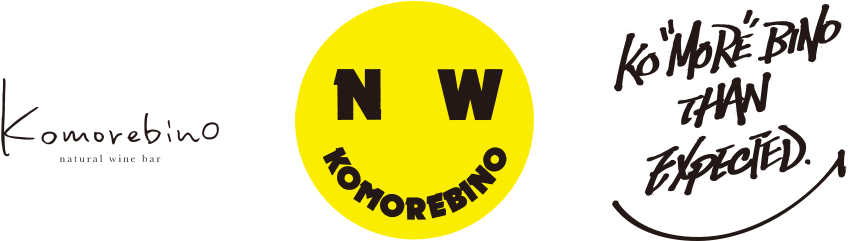
The logo on the shop’s sign was drawn by hand, crafted by the owner when the business first opened in 2017. The last "o" in the word represented a full moon. It seemed as though the soft light of the moon filtered through the branches, quietly embracing the name of the shop, like a secret shared between the trees and the night.
In 2020, the world was swallowed up by the pandemic. In Japan, under government orders, businesses were forced to close, and the shop was left in a long, uncertain hiatus until March of 2023. The heavy door remained shut, and there was nothing to do but wait for time to pass. Just wait. Eventually, the world began to open up again, little by little. Travelers began to return to Japan, and with them, the shop slowly started to regain its former rhythm. But just as things seemed to be returning to normal, Yamamoto, the sommelier, was diagnosed with cancer. Strangely enough, it was also the day his second child was born. Life, in its way, has a peculiar tendency to balance things out like this, like a strange equation. The shop closed again. But it was not the end. People came together, offering their help despite their own busy lives. Others, from far corners of the world, waited—quietly, persistently—for Yamamoto’s return.
To lift his spirits, the staff created a new logo. The "N" stood for natural, the "W" for wine, and the letters of komorebino formed a soft curve, like the shape of a mouth. In the center, the full moon—the shop’s symbol—smiled gently, as if it knew everything would be all right in the end.
After a year of chemotherapy, Yamamoto made a miraculous recovery. And now, he was back behind the counter. But there was one thing that troubled him. His hair had fallen out. The staff were simply relieved and overjoyed that he was alive, but to him, the loss of his hair felt like a mark, a visible reminder of his struggle. So, the staff gave him a hat, with a simple message: ko”more “bino than expected.(more than expected) It was a quiet message, one layered with meaning. The results of his treatment had exceeded expectations, just as the shop always aimed to exceed the expectations of its customers. And, perhaps more importantly, it was a reminder that we live in a world that continually surprises us, a world that defies imagination.
Yamamoto took the hat in his hands, staring at it for a long moment. Then, slowly, he placed it on his head. The shop reopened. The moon remained, as it always had—silent, steadfast, unchanged.
(inspired by Haruki Murakami’s characteristic style on chat GPT)